



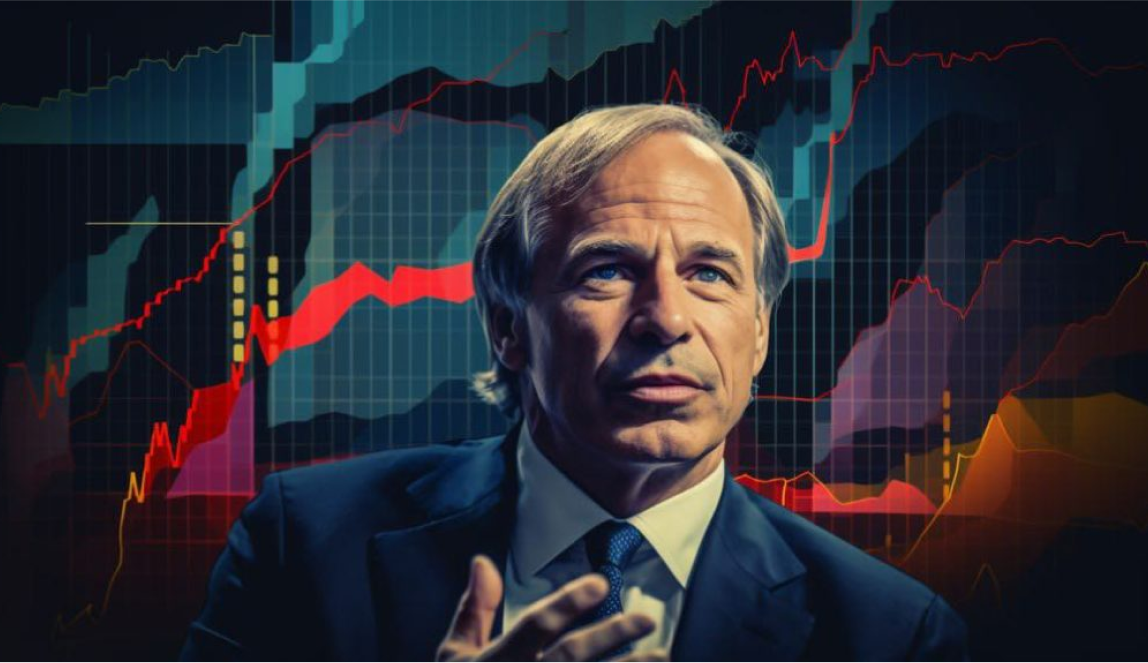
Dalio's principles represent a process of extrapolation and in-depth study of the working principles and models adopted by empires and major nations (global systems) throughout the ages, which continue to be utilized in various forms, patterns, and scales up to our present-day—whether at the level of nations or even global and local corporations.
In this first article by vizyonercon Consulting, we are pleased to shed light on the overarching guidelines that companies and projects should leverage. Operating under these guidelines helps build successful and sustainable systems. Additionally, we will endeavor in this article to clarify the factors that contribute to the growth and decline of economic and non-economic strategies of nations. This will provide companies with a clear picture, enabling them to benefit from these lessons in developing their future strategies and plans, ultimately achieving the desired growth.
Dalio's Principles in Understanding the World System | A Magical Recipe for Commercial Companies

In the rapidly changing global landscape today, it has become essential to understand the cycles of major change on a global scale and their profound impact on prevailing economic and political systems.
Renowned investor and economic expert Ray Dalio, founder of Bridgewater Associates, one of the world's largest hedge funds, has researched the patterns and principles that have shaped global empires and economic systems' rise and fall over the past 500 years. He has done so through his valuable book:
Dalio has leveraged this in-depth analysis to derive valuable applications within the corporate world, investment funds, and policy makers in today's volatile economic situation.
|
مبادئ التعامل مع النظام العالمي المتغير: لماذا تنجح الأمم وتفشل؟ |
Principles for Dealing with the Changing World Order: Why Nations Succeed and Fail? |
How did Dalio learn to anticipate the future by studying the past?

In his youth, many painful and unexpected events occurred that had a significant impact on the global economy. Dalio noticed that such events had occurred multiple times before, which prompted him to study the past 500 years of history.
The story begins in 1971 when gold was considered real money, and paper money merely represented the value of gold, much like a checkbook. At that time, the United States was spending more money than it had in gold reserves, leading many to believe that they would not be able to fulfill their promises for all the paper currency in circulation. As a result, anyone holding dollars rushed to exchange them for gold before the supply ran out, and the actual gold reserves came close to being depleted.
To overcome this crisis, President Nixon addressed the nation in a diplomatic manner, revealing that the United States would no longer allow the exchange of the dollar for gold. Dalio expected stocks to decline the day after the President's speech, but he was surprised to see the opposite happen. The stock market witnessed a frenzy, with stocks rising by approximately 25%.
This specific event led Dalio to delve into history, where he discovered that a similar situation occurred in 1933, following President Roosevelt's announcement to halt the exchange of the dollar for gold.
When Dalio analyzed these two cases, he found that when the United States severed its ties to gold, it allowed them to increase spending by printing more dollars. This, in turn, led to a decrease in the value of the dollar and an increase in the prices of everything, including gold, stocks, and commodities.
Reasons for Dalio's Analysis of the History of Major Economic Systems

There are three events that prompted Dalio to analyze the history of empires and major economic systems through his aforementioned book…
The first reason :
Countries did not have enough to pay off their debts even after interest rates had dropped to zero, so their central banks began printing a lot of money to meet their obligations.
The second reason:
The emergence of internal conflicts due to increasing disparities in wealth and values. This was most evident in the conflicts between the political right and left, where the polarization from the left, which seeks wealth redistribution, is met with the right, which aims to defend the interests of the wealthy.
The third reason:
Behind Dalio's exploration and study of history lies in the growing conflicts between a rising great power and an established one, just as is happening now between China and the United States.
Dalio's methodology
Insights into the Strategy of Analyzing the History of Empires and Major Economic Systems
”
It won't be precise, but it will be generally instructive.
“
This is how Dalio expressed the importance of examining and studying past time periods to understand the challenges we face and make sound decisions for navigating such times effectively.
Dalio's research was based on a comprehensive analysis of over 12 empires and global economic systems, tracking the factors that contributed to their growth and eventual decline. He highlighted common trends and unique circumstances for each of them, closely examining the patterns of the rise and fall of empires and global economic systems, including Dutch, British, American, and Chinese systems.
He relied on a precise strategy built on economic analysis, cultural and social factors, as well as the impact of global competitions and alliances on the dynamics of power and shifts in the global system.
Dalio patterns in the rise and fall of empires and their economic systems

This is how Dalio expressed the importance of extrapolating and studying previous time periods in order to recognize the challenges we face, and make sound decisions to navigate such times well.
Dalio based his research on a comprehensive analysis of more than a dozen global empires and economic systems, tracing the factors that contributed to their growth and eventual decline.
Highlighting the common trends and unique circumstances of each, by closely examining the patterns of the rise and fall of empires and global economic systems, including the Dutch, British, American, and Chinese systems.
In doing so, he relied on a precise strategy based on economic analysis, cultural and social factors, in addition to the impact of global competitions and alliances on power dynamics and transformations in the global system.
Dalio divides the cycles of major change for each empire and its economic system into three phases: the rise, the peak, and the decline…
The Rise Phase
Characterized by innovation, strong leadership, military expansion, economic growth, infrastructure development, encouragement of innovation, and technological advancement through investment in education and intellectual endeavors.
The Peak Phase
When the peak phase is reached, power consolidates, with cultural flourishing and border stability. The empire and its economic system thrive, becoming insulated from challenges, leading to peace and prosperity.
However, as this state becomes routine, there's a reliance on its continuation through borrowing money. This can lead to a financial bubble where the state's share of trade increases. When all trade transactions are conducted in the local currency, it becomes a reserve currency, leading to increased borrowing.
Increasing prosperity
Despite all of this, there is increasing prosperity, followed by the unfair distribution of wealth, leading to a growing gap between the rich and the poor.
The Decline phase
The previous phase marks the beginning of the decline phase, where the financial bubble bursts, central banks start printing money, and internal conflicts between the rich and the poor intensify. This can lead to wealth redistribution, either peacefully or through civil war.
Dalio's study reveals important insights that companies can integrate into their future strategies and plans, such as:
- Enhancing efficiency.
- Focusing on innovation and its impact on increasing productivity.
When companies prioritize these qualities, they can maintain a competitive edge in the global market.
- The risks of excessive borrowing.
- Debt accumulation often leads to financial bubbles and eventual crises.
He emphasizes that the foundation of a company's success is earning more than it spends. Additionally, dealing with others effectively and promoting a culture of mutual respect and understanding are crucial for mitigating internal conflicts and divisions.
How do companies benefit from the Dalio Principles of Success?
Companies can benefit from Dalio's principles to achieve success by focusing on the following
axes:
Embrace innovation and competitiveness
Stay at the forefront by promoting a culture of innovation, adaptability, and continuous learning.
Dalio's study emphasizes the need for relentless pursuit of innovation, adaptability, and learning. This future-oriented approach will help enhance your company's leadership in global trends and changes.
Maintain financial integrity
Practice financial responsibility to sustain growth without susceptibility to economic downturns.
In Dalio's discussion of financial management, he underscores the importance of financial responsibility. Therefore, you should strike a strategic balance between your investments, debts, and growth to ensure long-term sustainability.
Invest in people and values
Build internal strength by promoting fairness, opportunities, and shared objectives.
Learn from history
Benefit from lessons of the past in strategic planning for the future, as history tends to repeat itself.
By drawing from historical lessons, Dalio provides a roadmap for anticipating and overcoming future uncertainties..
”
It is likely that your company will thrive by incorporating these ideas into its strategic planning, especially in a rapidly changing global system.
“
In nutshell
Ray Dalio was able, through his book "Principles for Dealing with the Changing World Order: Why Nations Succeed and Fail" to provide a comprehensive analysis of the rise and fall of empires and the global economic system. This offers valuable insights for companies on the fundamental principles governing success and failure across various scales.
Today to mutually enrich our understanding of growth strategies, predicting future outcomes, and improving performance metrics. We will build, monitor, and leverage our cumulative management expertise developed over decades in sustainability program development to achieve better results in your current and future projects and businesses.
Edited by: Vizyoner Corporation for Consultancy ©
Source: Ray Dalio